
What to Do With Kohlrabi?
September 9, 2011 § 3 Comments
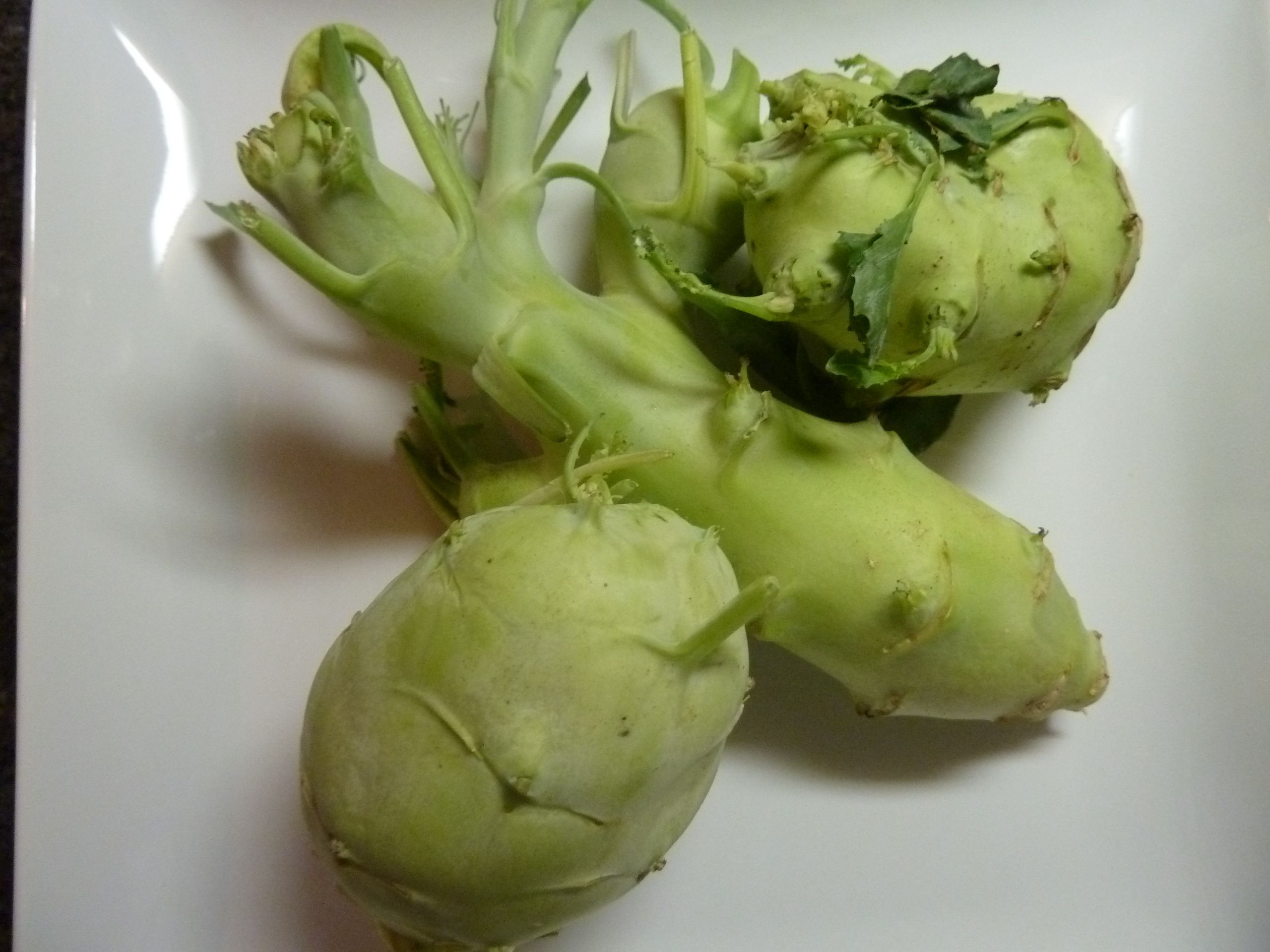
Kohlrabi, my garden's "Let's try something new" veggie for 2011.
Kohlrabi. German for cabbage turnip. English for “What the hell is this thing?”
Duh, I know what kohlrabi is. It’s a member of the brassica clan, i.e. cabbage, broccoli, cauliflower, Brussell’s sprouts, etc. All the brassica veggies are basically the same plant. One’s leaves form a head, one green florets, one really floppy outer leaves, one’s stem produces tiny head at the axillary buds. And in the case of kohlrabi, the stem swells up to the size of an ostrich egg.
Careful now, Dainty. You’re showing your botanical geek side. Calm down. Calm down.
I’ve never grown it before. Dad and the farm didn’t grow it either. But this year I bought a 6-pack of kohlrabi transplants as my “Let’s try something new” experiment. Why not, right? You only live once. Might as well grow some kohlrabi.
As you can see, my six transplants turned into 3 harvestable (barely) knobby things. One didn’t make it through the transplanting. One actually grew into broccoli. Note to self: Don’t buy transplants from the store again – your transplants labeled zucchini were actually yellow squash and the purple eggplant turned out to be white. As for the last transplant – no idea what happened to that, I lost track of it. Oh, well.
Anyway, so I’m here with three kohlrabi. One looks pretty good. One turned into the funniest looking kohlrabi ever – I expect my award in the mail any day now – and one looks like it’s been sitting in the hydrator a little longer than it should (true, every word).
And I have no idea what to do with them. Oh, sure, I’ve Googled. Saute it like broccoli stems. Cube. Puree. Middle Eastern and Indian dish galore have found their way into my searches. But I’m stuck. Folks, I’m at a loss. Indecision is a horrible thing.
So, dear Daintyites, , I’m looking to you for suggestions. Any ideas? Anyone? If you have a recipe – any recipe at all – please leave a comment below. I may need to hit the farm stands and gather up more of this brazen brassica.
Pickled Beets
September 6, 2011 § 2 Comments
Last year I had a Ziploc bag of small red beets sitting in the hydrator for … months. Months. I had intended to pickle them. Didn’t happen. They sat for ages – actually, I was quite impressed with just how long they lasted – until one day they were just gone. I think Jennifer may have realized the pickling wasn’t going to happen. Or I chucked them and don’t remember.
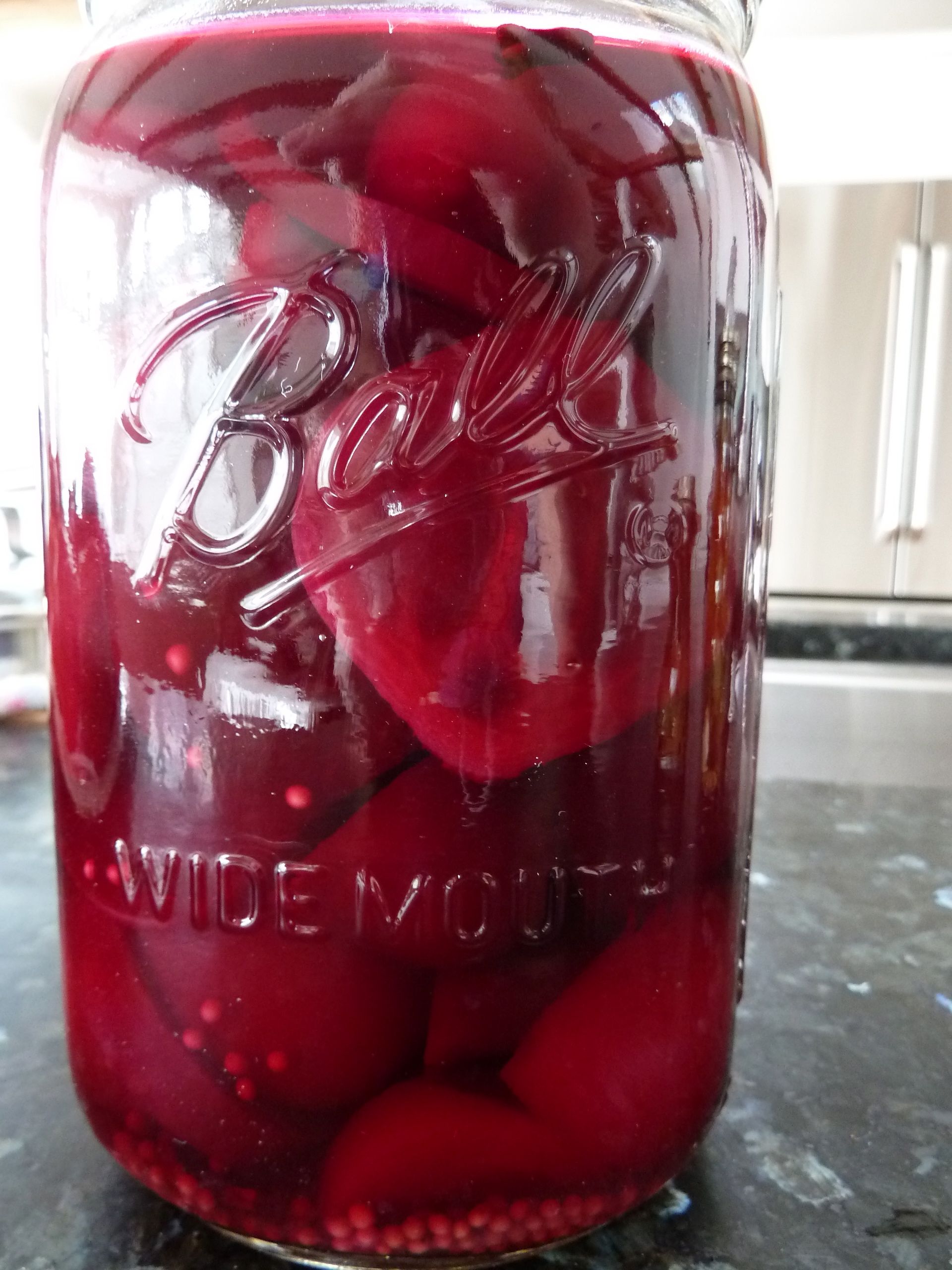
Pickled beets, not quite how Grandma used to make.
The pickling didn’t happen because I couldn’t decide on exactly how to tackle it. What recipe to use? What about canning them? What if?
My god, I can’t live with the what ifs anymore. Just freakin’ pickle beets, Dainty.
That’s exactly what I did last week. And I’m happy to say I have a quart of beautiful pickled beets sitting in my fridge at this very moment.
Well, what recipe did I decide on, you ask? It’s a combo of a recipe found in the August Bon Appetit and a recipe for Vinegar Beets from my mother, which I just found out was her mother-in-law’s recipe; i.e., it’s old.
Mom’s recipe calls for boiling the beets until tender, slip off the skins, and combining a cup cider vinegar, a half cup sugar, 1/4 tbs cinnamon stick, 1/4 tsp allspice berries, 1/4 tbs mustard seed, 1/4 tsp salt and 1/4 tsp whole cloves. She boils that for 3 minutes, then adds the beets to boil again. Then she adds the beets to a jar and strains the liquid. Boiling twice?? To infuse the beets with the spices, she said defensively.
On the other hand, Bon Appetit suggested 3/4 cup each of red wine vinegar and dry red wine, 1/2 cup sugar, 1.5 tsp salt and star anise.
Compromise, compromise.
Ingredients
- About 2lbs. beets – I used a combo of red and golden, and don’t use any that are too very large
- 1.5+ cups red wine vinegar
- 1/3 cup sugar
- 1/4 tsp salt
- 1 cinnamon stick
- 1/2 – 1 tsp mustard seed
- 1/2 – 1 tsp whole cloves
-Boil the beets until a sharp knife slips through your largest beet. Could be 20 minutes, could be more – it all depends on the size. Drain and let cool until cool enough to handle.
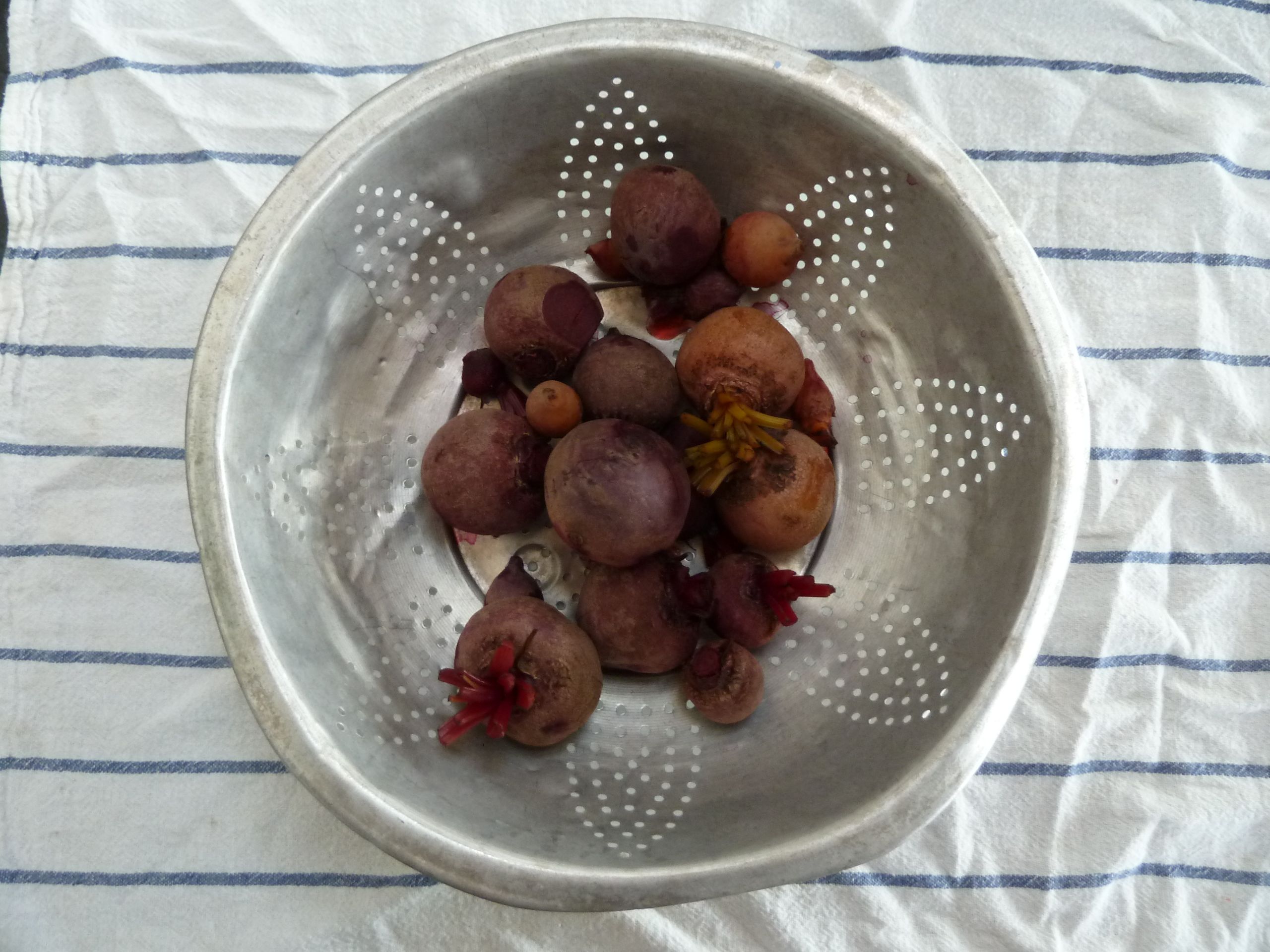
Beets cooling until they can be stripped naked
-When cool, the skins just slip right off. Pretty darn amazing how easily they come off. FYI, you’re gonna stain your hands.

Skins slip off incredibly easily once beets are boiled.
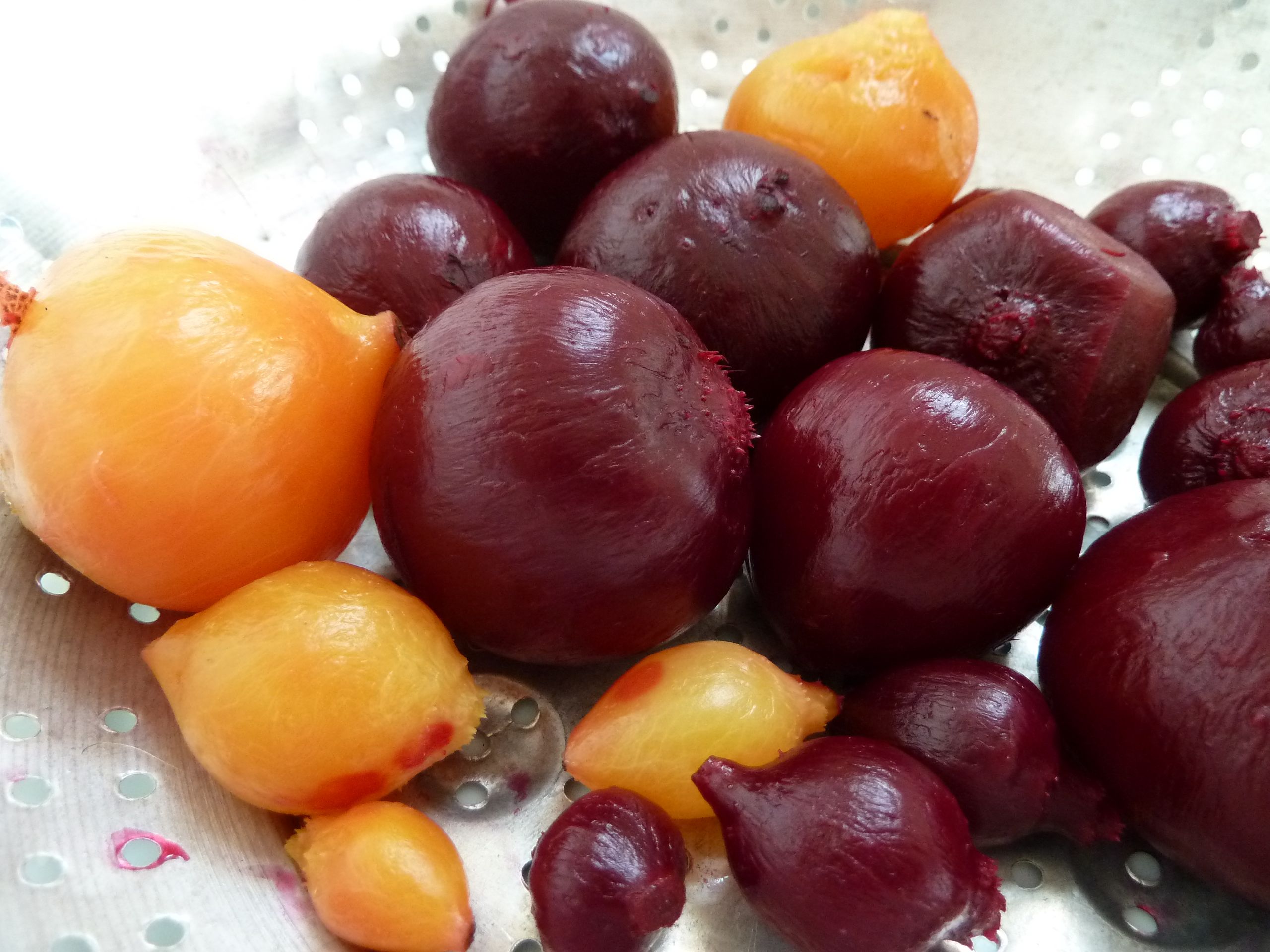
How beautiful are these??
-While those cooled, I cleaned/sterilized a 1-qt. jar. I added the cinnamon stick (which I crushed a bit), the mustard seed and the cloves.
-When the beets were cool, I left the small beets whole and put them into the. jar. The larger beets I cut into quarters, and some of them I sliced.
-Meanwhile, I combined 1.5 cups vinegar, sugar and salt in a saucepan and boiled until the sugar and salt dissolved. Then I let it cool a bit. While it was still a tad warm, I added the liquid to the jar.
-Turns out 1.5 cups vinegar wasn’t quite enough to cover the beets in the jar. Hence the “1.5+ cups vinegar in the ingredient list. I warmed another 1/4-cup-ish of red wine vinegar added with a couple pinches sugar and a nip of salt. Dissolved that, then topped off the beets.
-And then I did something crazy: I added a half-shot of Southern Comfort. Bon Appetitit’s recipe called for dry red wine, so hey, why not a glug of SoCo? Barely perceptible, but there is a hint of a sweet smokiness. Pretty good, if I do say so myself.
Cover, let sit on the counter for a day to let the flavors develop, and then give ’em a try. They’re good! And they really do only get better with time.
What? No canning them? I decided not to, and opted for the “put them in the fridge for easy access” method. I still have beets in the garden – two sets of beets, actually – one that’s ready for harvest at any time and one that I just planted a few weeks ago for a late-November harvest. The latter will likely be headed for pickling, and this time for the canner, as well. And this time I mean it.
Pickling Green Cherry Tomatoes
September 1, 2011 § 3 Comments
What does a gardener do when a little thing like a hurricane is imminent? She cleans out the garden of all ripe, nearly ripe and totally unripe tomatoes, that’s what she does.
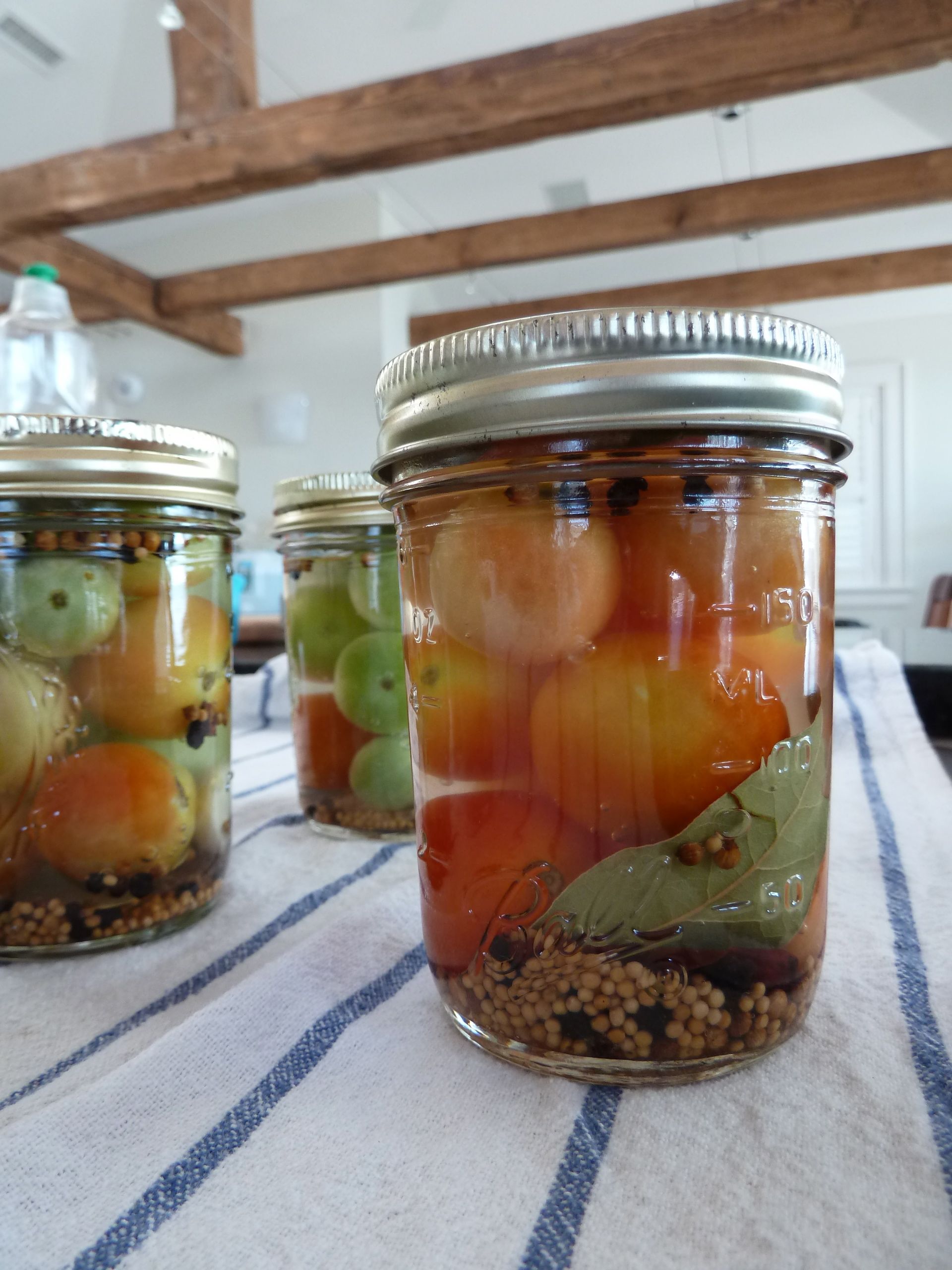
pickled tomato scrumptiousness
Ripe tomatoes have been dispatched to salsa, gazpacho and pizza toppings.
Somewhat ripe tomatoes are on a tray and ripening, possibly for a sauce.
Ripe cherry tomatoes are … well, in a bowl and thinking of what they want to become. Possibly tomato cobbler. We’ll see.
The unripe tomatoes – interestingly all cherries – are destined to be pickled.
I know what you’re thinking: Pickling is soo sooo very trendy. Maybe it is. BUT … I’ve been pickling green cherry tomatoes since 1994. My housemate at the time – Lou – had been pickling since forever and shared the recipe. Pickle the cherries at the end of the season – right as you’re grabbing them off the vine before the first frost – and they are good and pickly and presentable as hostess gifts for fall dinner parties. Oh, that Lou.
A couple of notes:
1. Pickling green fruit is key here. Too much red ripe deliciousness and they cherry will swell and burst, making a jar full of mush. But, I do try to add a cherry or two to the jar that is turning just a bit orange. It’s pretty. So so pretty.
2. Would it be okay to cut green slicing tomatoes into chunks and pickle them? Well, yeah, maybe. I’d remove the pulp and use just the flesh. We want to avoid mush.
3. And with the pickling spices, garlic clove and sneaky pepper, they taste just fabulous. Ohhhh …. yum.
Pickled Green Cherry Tomatoes ala Lou
- 21 8oz. jelly jars with new lids and rings
- 8 cups white distilled vinegar
- 4 cups water
- 1 cup salt
-Don’t have enough tomatoes to fill 21 jars? Work the proportions for the number of jars you can fill. I quartered the recipe and it filled 6ish jars.
-Boil the above and let cool.
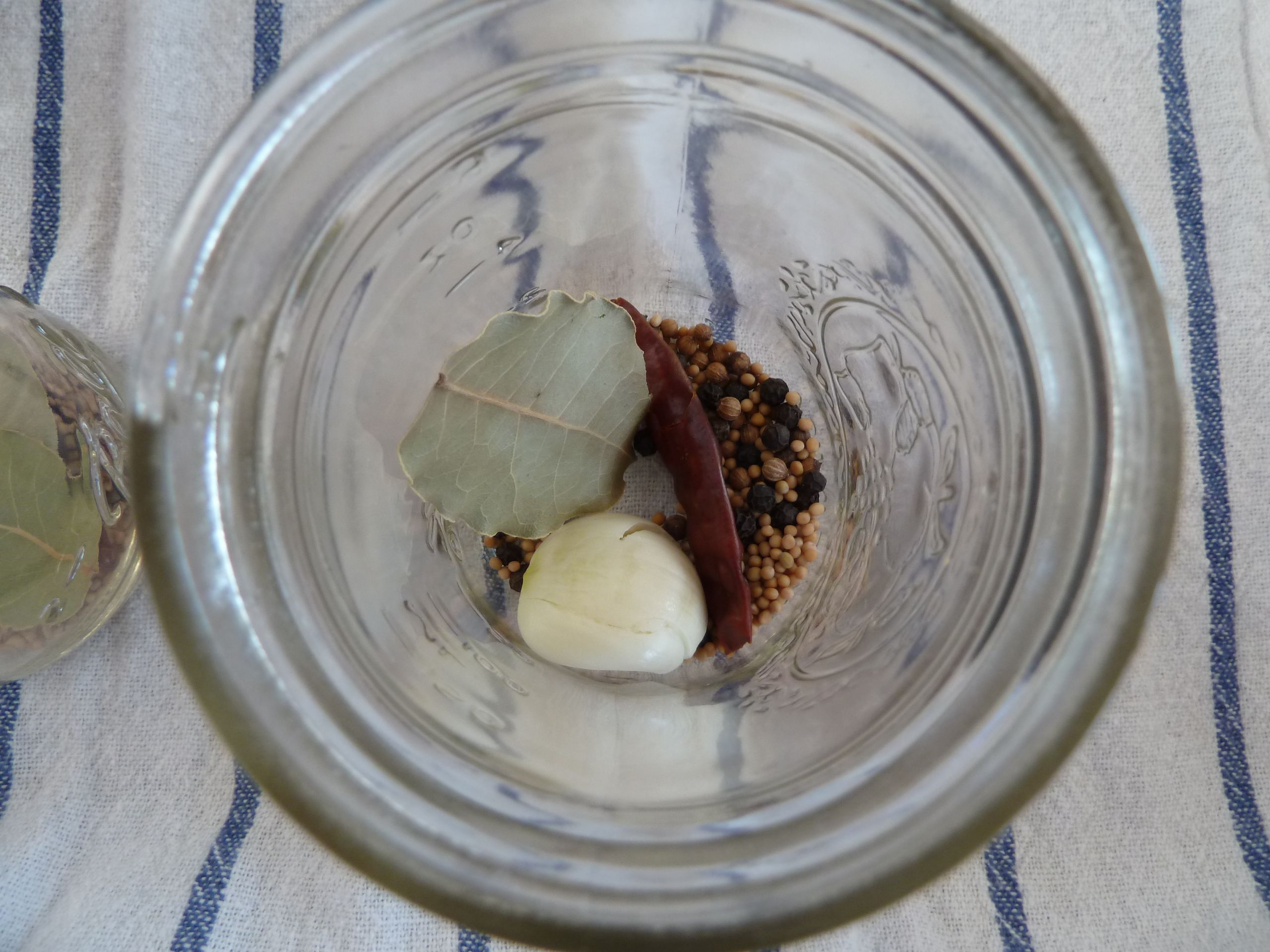
Fill'r up with pickling spices.
To each jar, add:
- 1/2 tsp coriander
- 1/2 tsp black peppercorns
- 1/2 tsp mustard seed
- 1 chili pepper, aka “a sneaky pepper”
- 1 bay leaf
- 1 garlic clove
-Add tomatoes to each jar, filling to within about 1/4-1/2 in. of the rim of the jar. Don’t jam them in too tightly – they may burst if forced.
-When the liquid has cooled, fill each jar to cover the tomatoes. Place a lid on each jar and tighten the ring. Let sit out overnight and then place in the refrigerator.
What about preserving them with canning? It’s definitely doable! I’m not the one to tell you how to do it. Really. Even though I witnessed my mother can jars and jars of everything from apricots to zucchini, none of it stuck in my head. And if something goes wrong … like when that jar of canned tuna wasn’t sealed properly … it can go terribly wrong. And I’m not gonna be responsible for your botulism.

I couldn't help myself - I made one jar more red than the others.
Vermont Cranberry Bean Salad
August 31, 2011 § 3 Comments
When I was a kid, my father would get a little stir crazy in winter and he’d do the worst thing a man with a 1-acre garden could do: Sit for hours with the Johnny’s Select Seed catalog. Fathers don’t get giddy as a rule, but I swear my dad would get as giddy as any school girl when the … um, somewhat large and heavy … box arrived. Sure, some of the seeds were for the farm: Seeds for 100 combined acres of broccoli, cabbage, cauliflower and pumpkins are a bit heavy. But then there were the items destined for our garden. Corn. Watermelon. Tomatoes. Peppers. Cucumbers. Zucchini. Squash. Yum. Yum.
But then … then there were the despised seeds: Peas and lima beans. And I swear, every single seed of those two crops came up and produced a bounty. Bleck and ugh … I really don’t like peas and lima beans. Really. Don’t. Like.
The worst part, really, and I don’t know how many of you can relate … the worst part was having to help my mother shell the bushels and bushels of pods these horrid plants would produce. You know how big a bushel is, right? It’s a lot. And now picture lots of lots. And having to take one lima bean pod or one pea pod, slicing it down lengthwise with your thumb nail, and then cajoling each pea or bean out of its home with said finger and into a pan. Pans and pans and pans of peas and beans. And Mom would blanch these mounds and mounds of peas and beans, put them into little plastic baggies, put the baggies in boxes, put the boxes in the freezers (yes, we had multiple freezers to store multiple upon multiple boxes), and then those boxes would come out of the freezer in the deepest, darkest of winter and end up on our plates. And then after dinner Dad would get out his Johnny’s Select Seed catalog and order more for the coming spring …
I really hate peas and lima beans. Really.
What did I find myself doing yesterday pre-lunch during my vacation? Shelling beans. Not a bushel, thankfully; just a gallon ziplock’s worth. The beans in question we grew in our garden this summer. No, not peas and not limas.They are Vermont cranberry beans. Beautiful pink and red speckly things. Gorgeous, really. No, I didn’t snap a pic pre-cooking. Sorry. But yes, we grew them this year—my garden plot neighbor has been growing them for years and loves loves loves them. Easy to grow. I’d tell you more about how to grow them except … well, okay, I’ll tell you. Sow the seeds about 2 inches apart in a row. Water. They will emerge. They’ll keep growing if you keep watering. I can’t even recall if I had to fertilize. It’s seriously that easy, people.
And the process at the other end of the line is just as simple, and way way way delicious. So very not a lima bean.

Vermont cranberry bean salad
Vermont Cranberry Bean Salad from Epicurious.com)
Serves 4
- 1 1/2 pounds fresh cranberry beans in pods
- 2 tablespoons salt
- 1/4 cup evoo
- 1 to 2 tablespoons fresh lemon juice, or to taste
- 2 tablespoons chopped fresh parsley or basil leaves
- ground black pepper
– Shell beans and place in a saucepan of boiling salted water. Salt the water! That way the beans really take in the flavor.Unfortunately, the boiling spoils the beans’ beautiful coloration.
– Boil the beans until they are tender. If all of your beans are picked at the same stage, they should all come along at the same time. Mine, not so lucky. To get the “more done” or more dry beans to a tender stage, the more fresh beans got a tad over-mushy. But, I kinda liked the variety within the dish.
– Drain beans and transfer to a bowl. While beans are still warm, toss with remaining ingredients and season with salt, if needed. Serve still warm for a fabulous flavor, or at room temperature.
I could eat this for days. And luckily, there’s a bunch more beans ripening when we get home.
Grilled Pizza
August 24, 2011 § 1 Comment
Summertime … and the grilling is easy. Cheese is melting, and the pizza is fine.
Okay, I’m no George Gershwin, but what I’m trying to say is this: Pizza on the grill is not only easy, it’s one of the quickest summertime grilled meals possible. What do I like about it most? The fact that I don’t have to deal with my smoke alarms going off. Yeah, that happens whenever we cook pizza inside. The super-heated oven ends up burning the corn meal that remains on our pizza stone. Pizza in January usually means both our front and back doors are open to prevent smoke buildup. No. Kidding.
So, when we can slap that pizza dough on a hot grill, we go there.
And you can go there, too.
I’m not going to tell you what kind of pizza to make. Your toppings are your toppings. You want pepperoni? Have pepperoni. You want smoked salmon? Go for it. Sauce? Yes, please—but don’t go overboard. A little dab will do ya (I’m showing my age with that quote).

My assorted pizza toppings, minus a bowl full of kale-ricotta mixture.
Plus, I’m not the pizza maker. Jennifer is the star when it comes to assemblage. I make the dough, I’ll make sauce. I’ll sous, but she chefs when it comes to pizza time. We’re practiced at this, but the following are our tips, not our must dos. Also, p.s., our grilling is done on a gas grill. Charcoal? A slightly different animal, so adjust as you see fit.
Grilled Pizza Tips
A hot hot grill is good. 500F is good. Clean it really well, not leftover burnt chicken skin, please.
Prep your toppings. I can’t emphasize that enough. Slice, dice, chop, stir. Get ’em ready. AND, pour a small bowl – maybe 1/3 to a 1/2 cup? – of olive oil to have on hand. Put ’em all on a big cutting board or tray to carry out to the grill.
Roll out a nice flat but not too thin dough. Round, square, oblong, whatever.
Here’s a great trick: Lightly oil a section of aluminum foil. Take that dough you just rolled out and put it down on the foil. Now, lightly swab the top of the dough with oil.

Okay, maybe I over-oiled this one. Swab off any extra oil!
Grill’s good and hot. Your toppings are ready to go. Your dough is ready to go. So, go out to the grill and … Quickly flip that dough, oiled top side down, on top searing-hot grill, and peel back the foil. There’ll be some “yikes!” and “oh, sh*t” moments, I’m not gonna lie to you. Pull the dough one way or the other, make your tweaks QUICKLY, and then close that grill cover. And fast. The sooner heat completely surrounds the dough, the quicker that dough is going to turn into a pizza crust. Right? Right.
Two-three minutes. Peek once or twice to make sure the underside is not burning. Oh, it’ll burn. Believe you me.

Oh damn, I burned the first one. These things happen.
NOTE: The first dough got kinda … well … crispy. I started another. Much, much better.
Get your mise en place in place, ready to go. Open the grill, flip that crust over.
Not using a sauce? Then give a quick brush all over the top with evoo. Using a sauce? Spread it thinly and quickly. Layer everything else on as you see fit. And be quick about it!
Close the lid for another couple of minutes. Keep an eye on the bottom, making sure it’s not burning. When the cheese (if you’re using) and the sauce look melty and hot, it’s time to take it off the heat.

Let sit for three minutes to let the sauce and toppings set. And then cut yourself a slice.
Worth it all, huh?
Basil Pesto: Can’t be Easier
August 23, 2011 § 3 Comments

All the fixin's for basil pesto
Think of all the good things in life.
Basil. Mmmm … Parmesan cheese … Olive oil … Garlic … Nuts … Chocolate … Okay, wait, drop that last one. All these are tasty on their own, very tasty. But whir them up together in a yummy pasty sauce and you have heaven on a spoon—basil pesto.
Basil is just one of the pesto varieties we make in the Dainty household. There are others. Oh, there are others. But typically, basil pesto is the shining star in so many dishes. A couple of dollops on pasta for a quick on-the-go meal. Spread it cautiously as a pizza topping. And schmear it on some rye bread for a tomato-provolone-pesto grilled cheese. Oh, yeah, I went there. Grilled. Cheese.
The secrets to good basil pesto are two-fold: Great-quality ingredients and a nice ratio of basil:parm:pine nuts:evoo. The amount of garlic, honestly, depends on your tastes. The recipe I use is from an old, back-‘n-the-day Moosewood cookbook called the Moosewood Restaurant Kitchen Garden. Not too much cheese. Not too saucy. Plenty of basil flavor.
Pesto Genovese (from Moosewood Restaurant Kitchen Garden)
- 3 cups loosely packed basil (avoid stems)
- 1/3 cup pine nuts
- 1/2 cup freshly grated parmesan
- 2-3 cloves garlic, roughly chopped
- 1/2 cup evoo
- salt/pepper
-Place the basil, pine nuts parm and garlic in a food processor. I like to put in half of all the ingredients, give it a whir, and then add the other half and give it a whir. That’s just the best way in my machine – things don’t get jammed in there that way. Be sure everything is chopped evenly. Give it a sprinkle of salt and pepper.
-With the food processor on, sloooooowly add the olive oil in a steady stream. It’ll slowly become paste-like. It may bunch up on the bottom—stop the machine and get all the good stuff from the corners. DON’T add all the oil. Stop the machine, give it a tasty. Good? Needs salt and pepper? Add some. Is the consistency kinda rough and thick and you like it? Then stop. Like it a bit more smooth? Keep whirring and add the remaining oil.
NOTE: The beauty of pesto is this: It can be any way you want it to be. Chunky. Rough. Pasty. Saucy. Hey, you’re the one eating it. Eat what you like.
-When it’s whirred to your liking, use what you intended it for right away.
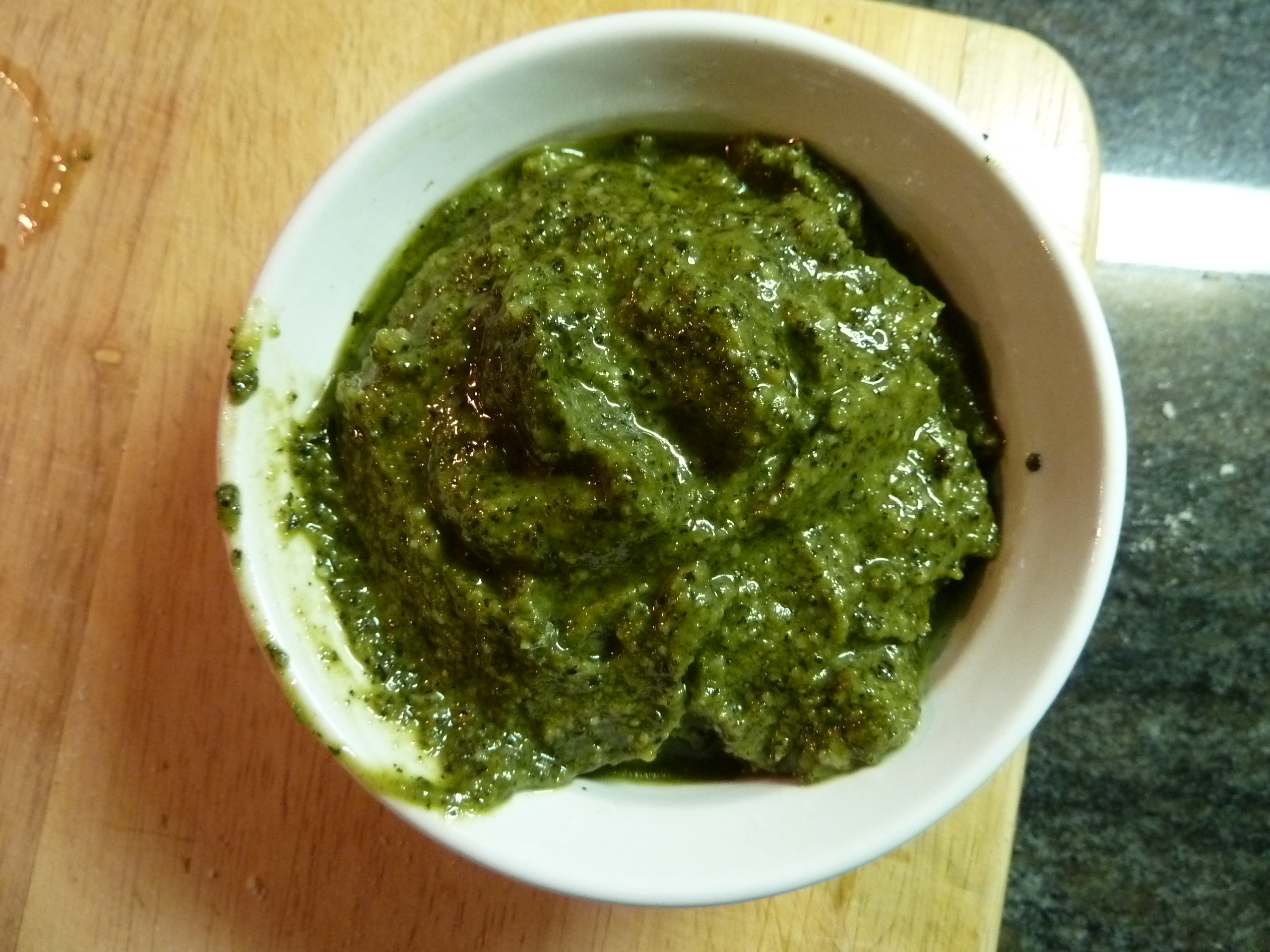
Basil pesto
OR—and this is the important part—take action to keep the pesto’s vibrant, fresh-green color. Here’s how:
-Place the pesto in an airtight food storage container (glass, plastic, whatever) that is large enough to allow some room on top. Smooth the top into a flat layer.
-Drizzle a thin layer of evoo on top so it completely covers the pesto. You don’t need to much but you do need to make sure all the pesto is covered.
This keeps the air from oxidizing the basil and keeps the bright green color. But you’re smaht, I’m sure you already knew that.
Enjoy. And maybe when it’s time to harvest our parsley before the first frost, I’ll share my super-secret recipe for parsley pesto.
Roasted Vegetable Lasagna
August 14, 2011 § 1 Comment
Sometimes … sometimes I just want to eat bad things. Good-tasting things but bad for you, or your waistline. Fried chicken. Wings. A big drippy pulled-pork sandwich. A pile o’pasta.
But if it’s homemade, I hear, it’s half as much calories, conveniently. At least that’s what I tell myself. And if it has vegetables in it, well … then it’s downright a health food.
So that makes our roasted vegetable lasagna not only calorie-free but good for you, too. And the best thing about this recipe is it’s a combination of three previous posts. Brilliant!
Recipe
- Roasted vegetables of your choice
- Homemade pasta
- Roasted cherry tomato sauce
- 1 lb. ricotta cheese
- 1/2 lb. chard
- 1 tsp nutmeg
- 3 balls of fresh mozzarella, thinly sliced.
- One rectangular casserole dish, what are they, 8×13?
NOTE: If you’re not making your own pasta … and really, you don’t have to … buy the lasagna sheets that you don’t have to pre-boil. A few cents more, but really, the convenience is worth it.
-Our roasted vegetables of choice for this lasagna are yellow squash. We sliced it into 1/4-in. slices, lengthwise. Glug of evoo, salt and pepper, and roast at 425F for 6 minutes each side.When done, set aside.
-Roasted cherry tomato sauce – just as the recipe says. You may want to puree it.
-Homemade pasta … prepare just as the recipe says. Make the sheets to fit half the width of the pan.
We have the sauce, the pasta, the veggies. Oh, wait – one more vegetable.
-Chard. Stem it and then steam it for 1 minute, 2 minutes max. Let it cool. Squeeze the water out of it. And chop. Set aside.
-Put the ricotta into a medium bowl. Add the chopped chard, nutmeg and a pinch of salt and combine. That’s your cheese filling.
Now it’s time to assemble! It’s all about layers. Get the layers, get the lasagna.
-Lay down a thin layer of sauce. Then top with two lengths of pasta sheets. If you crank out the pasta as you go, you can cut the pasta to the correct length. Top the pasta with some roasted vegetables. For the squash, we fit 4-5 lengths of squash per layer.
-Next, spread some of the ricotta – as much as you’d like – over the veggie layer. Dot with slices of mozzarella. A little cheese, a lotta cheese – whatever you want.
-Add another layer – sauce, pasta, veggies, cheeses. You can make as many layers as you have ingredients for. Three or four is typical. Just keep going until you fill the dish and have absolutely no more room.
-When you are done layering, you’re going to top with a layer of pasta, then a thin coating of sauce. Then top with as much mozzarella cheese as you like. And a dusting of parmesan, too. Done!

-Cover with aluminum foil. Pop into a 375F oven for 25 minutes. Remove foil and cook for another 15ish, or until the sauce and cheese are bubbling.
-Let it sit for 10 minutes.
Try not to make a pig of yourself at the dinner table. Really, you’re better than that.
Roasted Cherry Tomato Sauce
August 14, 2011 § 5 Comments
I’m telling you, some gardening years are better than others. A string of spectacular harvest sseasons from my small urban plot have made this summer a “meh” – that’s on a scale from “it sucks” to “this is freakin’ amazing.”
My cherry tomatoes—I’m not thrilled with them. They’re growing okay. I just don’t like the fruit. Too big. Too thick-skinned. And the flavor fell flat. Cherries are supposed to poppable, add a brightness to a salad. These? Meh.
When life gives you lemons, right?
So, these cherry tomatoes went straight into sauce. Roasting brings out the sweetness they lack when just sitting on your salad.
Step 1: Put about 2-3 lbs. cherry tomatoes in a cast iron skillet. Add a couple of tablespoons evoo, sprinkle with kosher salt and give it a couple of turns of fresh ground pepper.

Cherry tomatoes seasoned and waiting to be popped into a 425F oven.
Pop it into a 425F oven for about 40 min. or until the tomato skins start bursting and the liquid starts bubbling. Let it bubble along for a total time of about 1 hour.
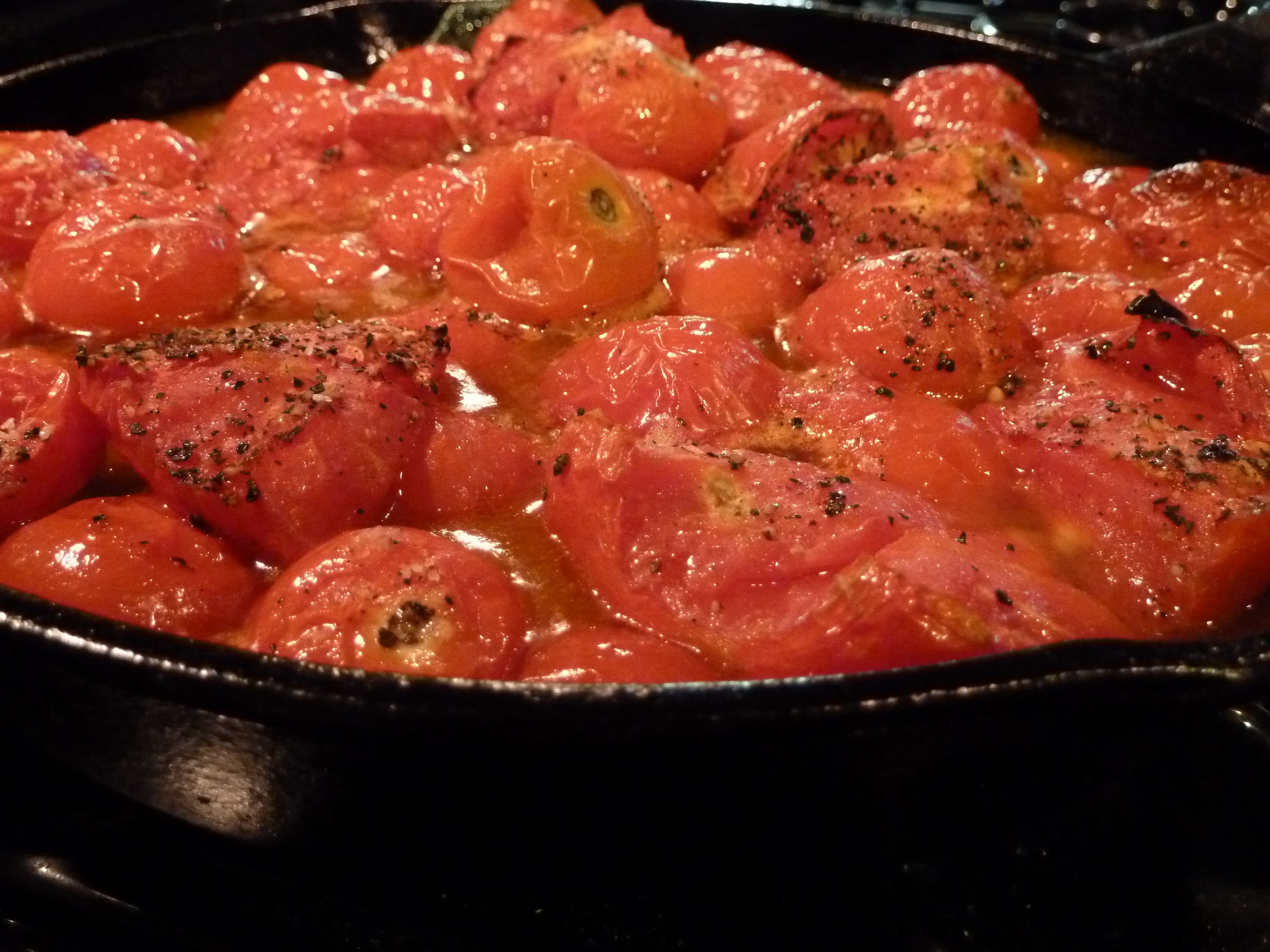
Cherry tomatoes after an hour of roasting
Step 2: Your gonna get lots of juice from the tomatoes, and you want to let it cook off. And you also want the flavor of the tomatoes come through more and get the sauce a bit thicker. So, take the skillet out of the oven and put it on the stove top over a low flame. Add 2-3 cloves of crushed garlic. Add some herbage; whatever you like. Fresh thyme or basil. Will it top a pizza? Add some chopped fresh oregano. 2Tbs is about right. Taste it for seasoning and add salt/pepper if you need to. And cook loooow and sloooooow. How long? Until enough liquid has cooked out to get the sauce to the thickness you like. In my case, 2 hours.
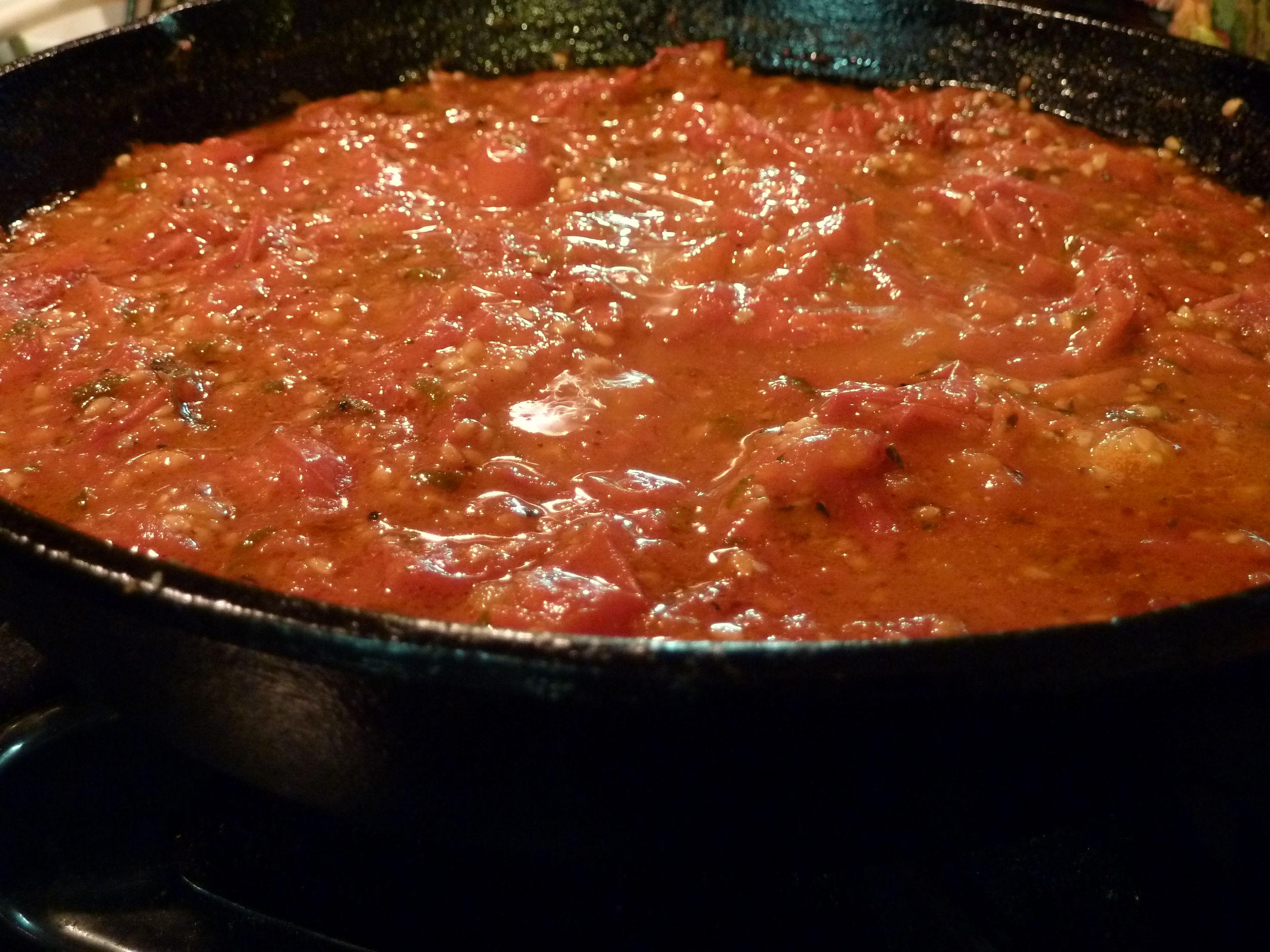
After two hours simmering on the stove top.
How easy was that? You might find it still a bit too chunky to spread on a pizza or spoon onto layers of lasagna. Whir it up in a blender or use an immersion blender if you like.
And how sweet is this, uh? You may never go back to plum tomatoes for sauce again.
Lime-Agave Vinaigrette
August 11, 2011 § 2 Comments
Life, sometimes, can get a bit bitter. Thank goodness we have sweets.
Mary Poppins was right about that spoonful of sugar—it helps pretty near everything taste A-okay.
Like my lettuce, for instance. I am still harvesting lettuce from the garden—in mid August! How crazy is that? But, well … it’s up and bolted on me. That’s a gardening term that means that nice compact head of leaf lettuce has sent up a flowering stalk, dragging all those individuals leaves with it. Worse yet, the leaves become bitter.
Now, typically you’d give up the ship at that point. Chuck it to the chickens, maybe. Not Dainty. Waste not, want not. Right? I mean, this’ll be my lunch for the next four days, come on! Keep the bitter stuff!
But I gotta sweeten it up. Maybe a salad dressing …
And then I remember a vinaigrette Giada DeLaurentis made on the Today Show two years ago. Lemon dressing with sweetness brought to you by agave nectar. Pretty darned good, I have to say.
Open hydrator drawers in fridge. No lemon. But there’s a big plump lime?
Lime-Agave Vinaigrette
3 Tbs lime juice
3 Tbs evoo
1.5 Tbs agave nectar
Combine. Shake. Season if you want, or just sprinkle a light dusting of salt and pepper over your salad.
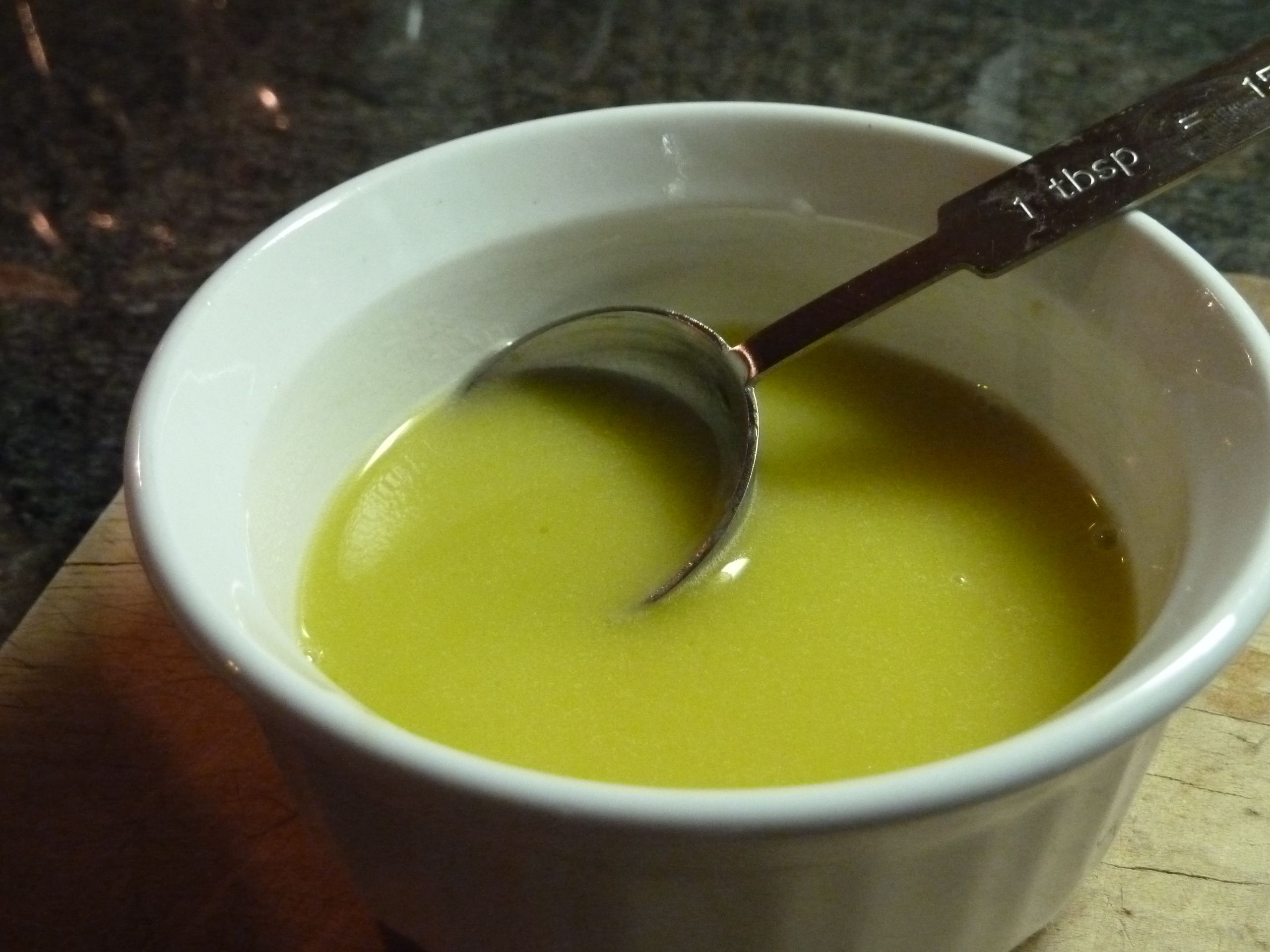
Lime-Agave Vinaigrette
Hits the sweet spot without the sugar.
Pasta Dough: It’s Easier Than You Think
August 10, 2011 § 6 Comments
Mmmm … fresh pasta.

Fresh linguini - the flour lightly dusts the pasta, keeping it from sticking together.
Have you ever had it? I mean fresh pasta. The kind someone has just made right there in the room. Not the stuff you buy in the refrigerated section of your local grocer. Okay, so that’s not dry pasta—but it’s not fresh fresh either.
What? Are you saying, “I don’t have time for that … “? Or, “Oh, that’s soooo complicated …”? It’s not. If you liked to make mud pies as a kid (and who didn’t?), then you can make fresh pasta.
Of course, I say this not having made fresh pasta myself. Jennifer is the pasta maker in our household. And she makes it look easy. She says it’s because it is easy. She first made it in a cooking class last year, and the technique below is from that class. The recipe comes from The Food Network’s Anne Burrell.
Try it. The only way you can screw it up is by making a horrible sauce.
Homemade Pasta Dough (from Anne Burrell)
- 1 pound all-purpose flour (get yourself a kitchen scale!)
- 4 whole eggs plus 1 yolk
- 1/4 cup evoo
- kosher salt – about 1 Tbs
- 1-2 Tbs water or more
-Set yourself up on a clean and dry work surface with plenty of room. Pile the dry ingredients (flour and salt) right on the work surface, and create a hole or well in the flour, making a doughnut-shaped ring about 8 inches wide.
-Crack all of the eggs and the individual yolk (I always do this in a separate bowl to catch the occasional shell) and add these to the well along with the wet ingredients—olive oil and water.
-Use a fork to beat the wet ingredients together. Then, you’re going to pull in the flour bit by bit into the egg mixture. I say bit by bit because you don’t want to pull too much of the flour into the center and break the ring’s side walls. Then your egg leaks out and it’s a big mess. As soon as the egg mixture has enough flour in it is no longer runny, you can put aside the fork and get your hands in there. Your hands are the best tools to combine everything completely.
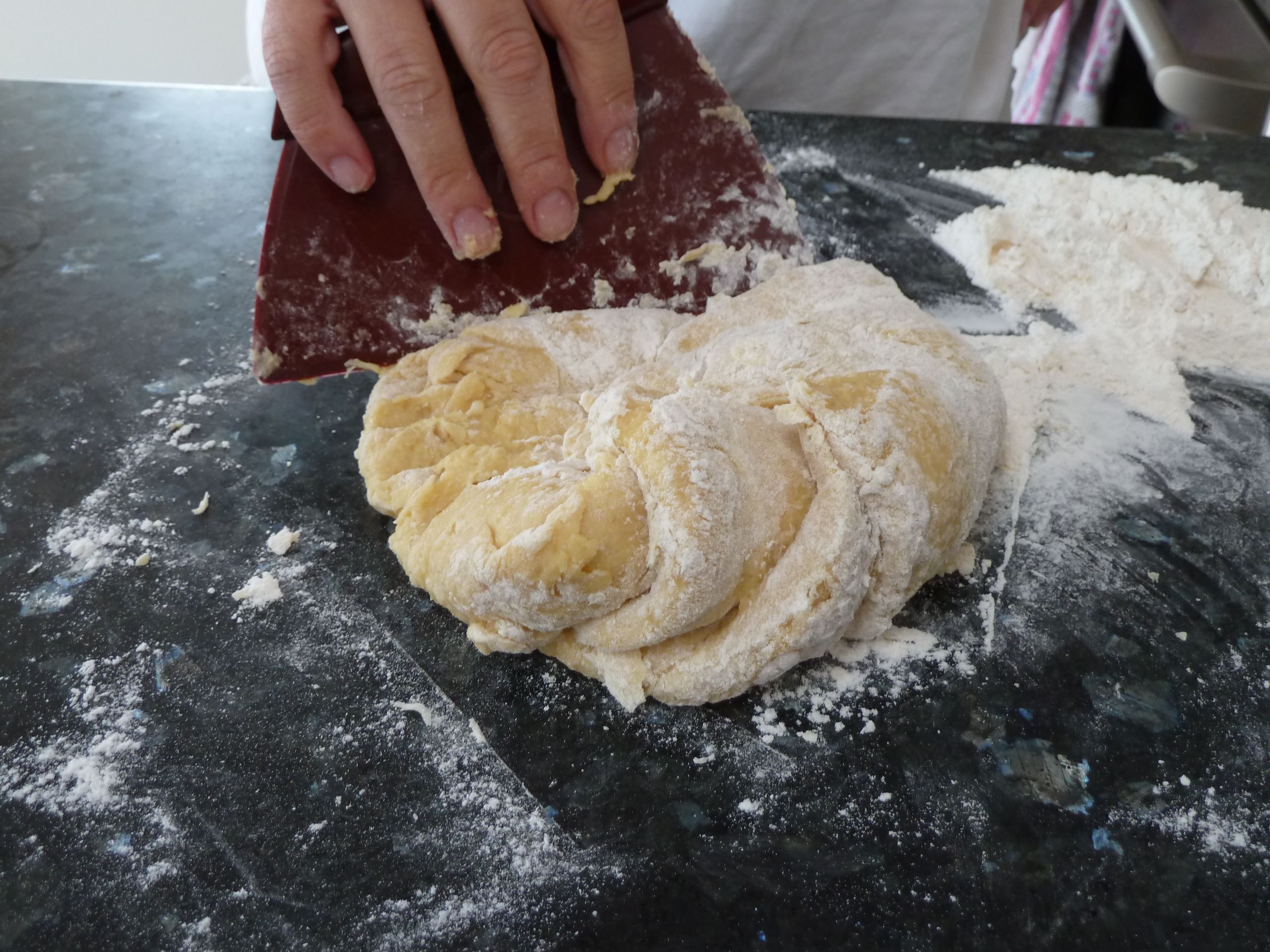
Incorporating the flour into the egg mixture
-When the mixture is completely combined, it’s time to start kneading the dough. Use your muscles! Get the heels of your palms in there push the dough away from you, stretching it but not tearing it. Push, fold, turn. Push, fold, turn. Put your weight into it, girl! Your goal is to create a dough that feels smooth and looks smooth. Warning: Eat an energy bar beforehand because you’re going to be kneading for 15-20 minutes. No kidding. But doing this by hand is the best way.

Knead it, girl!
-When you start thinking that perhaps you’re done, take a knife and slice the dough in half. Look at the inside of the dough—does it have small bubbles in it? Yes? Then keep kneading. You want the dough to be smooth throughout.
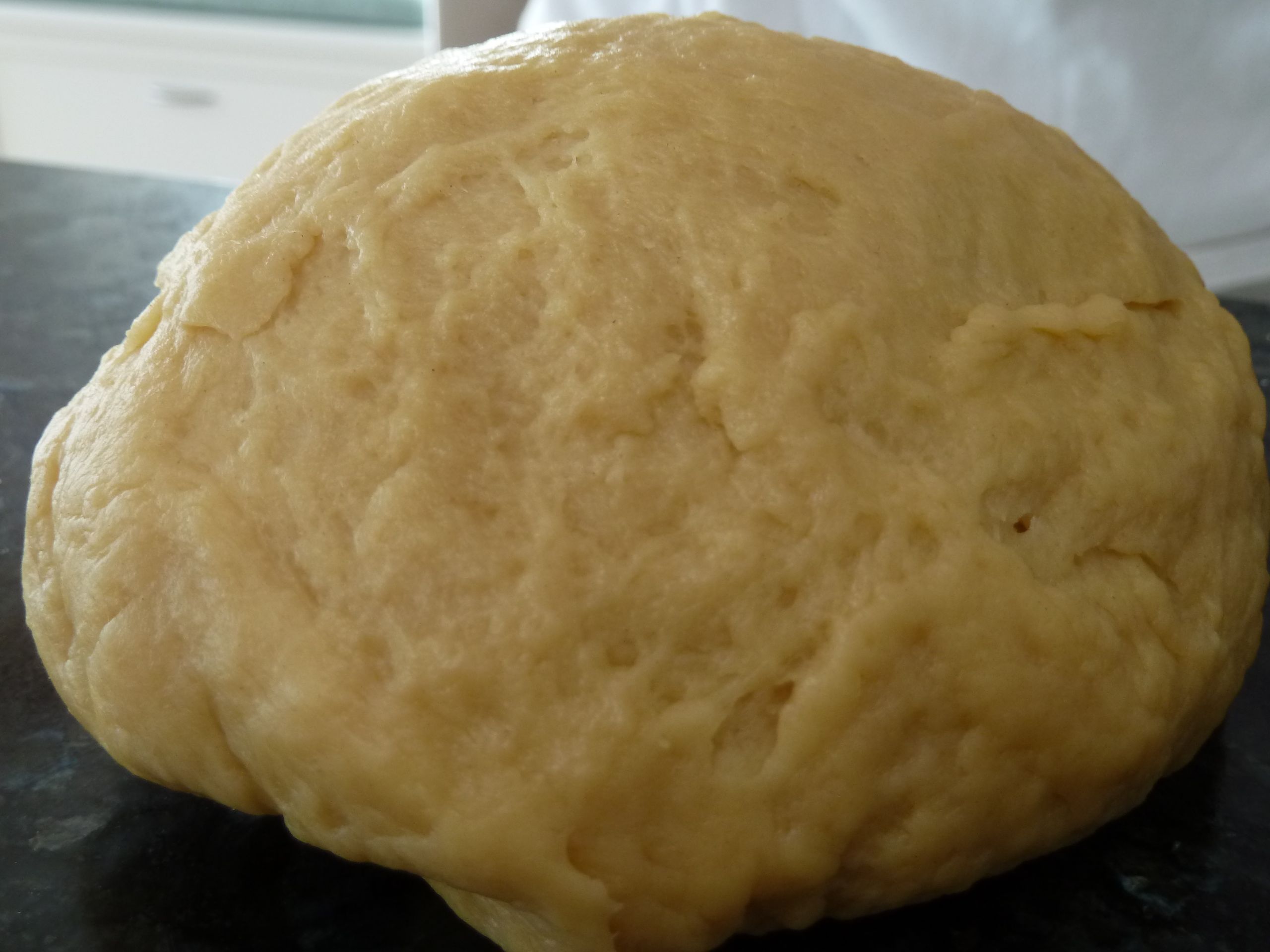
-Wrap the dough in plastic wrap and let it rest for 1 hour. Put it in the fridge until you’re ready to use, or use it right away.
What next? Get rolling! Usually this is done with a pasta roller. There are ones you can attach to your counter and crank by hand. We have one that fits on our Kitchen-Aid and turns automatically—so much easier. Either way, what you want to do is cut that ball of dough into quarters or eighths, pat it into a bit of a square shape of even thickness, add a touch of flour to make it less sticky, and run it through the pasta roller starting on the thickest setting—usually the number 7. Roll it through twice, then take it down one thickness, and so on, patting it with flour now and then. We usually go down pretty thin, usually to a number 2. As it gets thinner, it gets looonger. We usually cut it in half to make it more manageable, especially if you are cranking the roller by hand.
Going through the roller you end up with a flat sheet. Perfect for making lasagna or raviolis. Or, take that sheet and run it through the spaghetti or linguini cutter (an add-on that usually comes with the roller). Separate the noodles, lay them on a platter, sprinkle with dusting of flour, and toss to prevent sticking. Do one flat sheet at a time this way, each time dusting with flour.
And to cook, all you have to do is drop that pasta in boiling water for 2 minutes, max.
Now, that’s great pasta.
 The Dainty Dot